Urbane Team
Cleaning & Hygiene Specialist
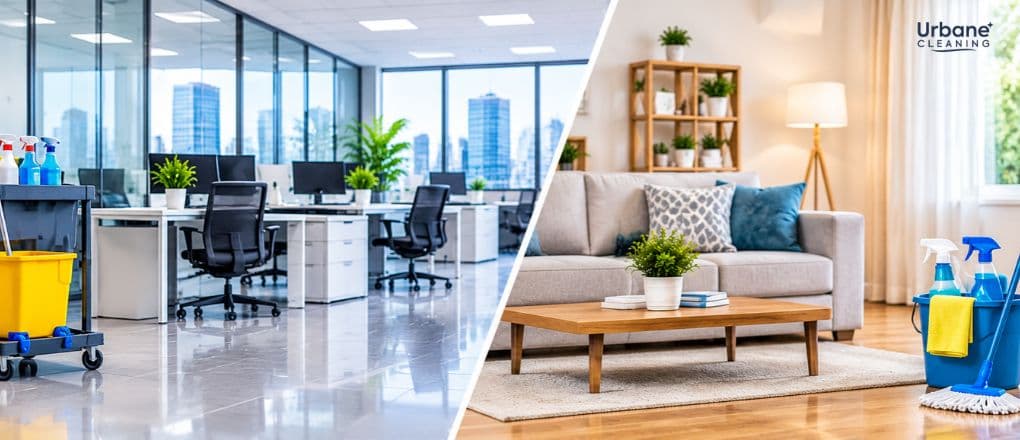
Commercial and residential cleaning differ mainly in the type and size of the spaces being cleaned. Residential cleaning focuses on homes and personal living areas, while commercial cleaning covers larger workplaces such as offices, retail stores, and other business facilities. Commercial cleaning often requires specialised equipment, flexible schedules, and more extensive cleaning procedures.
What Is the Difference Between Commercial and Residential Cleaning?
Commercial and residential cleaning both aim to create clean, hygienic and well-maintained environments, but they involve different requirements, priorities and cleaning approaches. Residential cleaning focuses on maintaining comfortable living spaces, while commercial cleaning is generally centred on keeping workplaces and business premises clean, presentable and suitable for daily operations.
The differences go beyond the type of property being cleaned. Factors such as property size, how frequently the space is used, cleaning schedules, hygiene requirements, equipment and the level of detail required all influence how a cleaning service should be organised.
At Urbane Cleaning, we support residential and commercial cleaning clients across Melbourne, including homeowners, tenants, rental properties, offices, clinics and retail spaces. Through the different cleaning requirements we work with, we have learned that no two properties necessarily need the same approach.
In this guide, we explain the key differences between commercial and residential cleaning, provide practical examples and discuss how to choose the right cleaning service for your property.
What Is Residential Cleaning?
Residential cleaning refers to professional cleaning services designed for private living spaces, such as houses, apartments, units and rental properties. Its primary purpose is to maintain a clean, comfortable and well-organised home.
Unlike commercial cleaning, which often follows structured workplace schedules, residential cleaning usually requires a more personalised approach. Every household has different routines, preferences and priorities. Some homeowners may need regular maintenance, while others may require a detailed clean before moving out or after a period of limited maintenance.
Common Residential Cleaning Services
Residential cleaning can include several types of services depending on the property's condition and the homeowner's requirements.
Common services include:
Regular House Cleaning: Routine cleaning of kitchens, bathrooms, bedrooms, living areas and other frequently used spaces.
One-Time House Cleaning: A single cleaning service for homeowners who need additional help maintaining their property.
Deep Cleaning: A more detailed cleaning process that targets areas often overlooked during routine housekeeping, including fixtures, corners, skirting boards and built-up dirt.
End-of-Lease Cleaning: A comprehensive clean of a rental property before tenants move out, with attention to areas commonly assessed during final property inspections.
Carpet Steam Cleaning: Cleaning carpets to help remove accumulated dirt, stains and other debris.
Customised Cleaning: Cleaning arrangements based on individual household priorities, property conditions and specific requirements.
Why Residential Cleaning Requires a Personalised Approach
A family home and a rental property may have similar layouts, but their cleaning requirements can be very different.
For example, a family receiving regular house cleaning may prioritise kitchen surfaces, bathrooms, floors and frequently used living areas. The main objective is to maintain a comfortable environment that suits the household's routine.
An end-of-lease clean has a different purpose. It generally requires more detailed attention to areas such as ovens, range hoods, cupboards, bathroom fixtures, floors and other parts of the property that may be considered during a final inspection.
At Urbane Cleaning, we believe residential cleaning should reflect how people actually use their homes. Understanding the household's priorities and the property's condition helps determine which areas need the most attention.
What Is Commercial Cleaning?
Commercial cleaning refers to professional cleaning services provided for business premises, workplaces and other non-residential environments. These properties can include offices, retail shops, clinics and various commercial facilities.
The main objective is to maintain a clean, organised and presentable environment for employees, customers, visitors and other occupants.
Commercial cleaning often requires more structured planning than residential cleaning. Businesses may need cleaning services at specific times, such as before employees arrive, after operating hours or during quieter periods.
Consistency is particularly important because commercial spaces are regularly used by multiple people throughout the day.
Common Commercial Cleaning Services
Commercial cleaning requirements vary depending on the type of business, property layout and daily activities.
Common commercial cleaning tasks include:
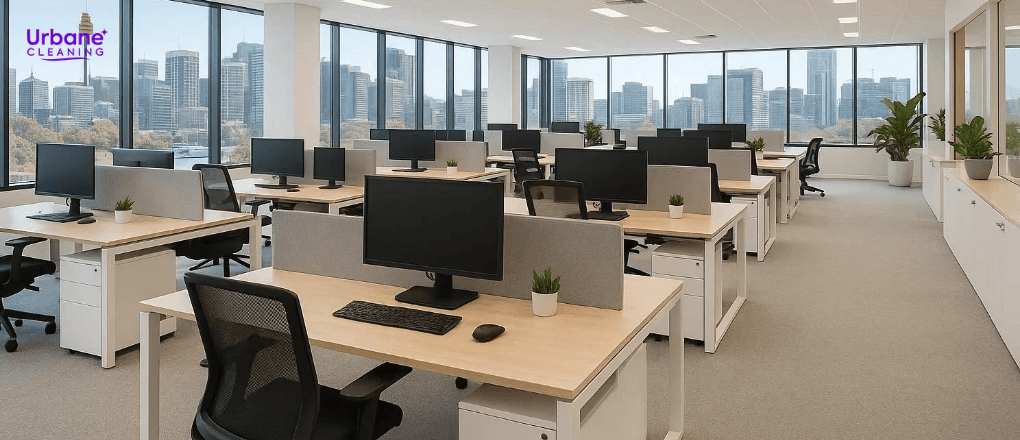
Office Cleaning: Cleaning workstations, meeting rooms, floors, reception areas and shared facilities.
Retail Cleaning: Maintaining clean floors, customer areas, display spaces and other frequently used sections of retail premises.
Clinic Cleaning: Cleaning designated areas according to the facility's hygiene requirements and applicable procedures.
Commercial Bathroom Cleaning: Maintaining toilets, sinks, fixtures and other shared bathroom facilities.
Kitchen and Breakroom Cleaning: Cleaning shared kitchens, food preparation surfaces where applicable, sinks and dining areas.
Common Area Cleaning: Maintaining entrances, hallways, reception spaces and other shared areas.
Scheduled Maintenance Cleaning: Providing regular cleaning services to help prevent dirt and grime from accumulating.
Why Commercial Cleaning Requires Structured Planning
Commercial properties often have different cleaning priorities because of how the spaces are used.
An office, for example, may have employees working throughout the day, visitors entering reception areas and multiple people using shared kitchens and bathrooms.
Cleaning needs to be organised around these activities to minimise disruption. Workstations, shared facilities, floors and frequently touched surfaces may need attention according to an agreed cleaning schedule.
Clinics and healthcare-related environments can have additional hygiene requirements. The appropriate cleaning methods, products and procedures should be selected according to the facility's specific requirements rather than assuming that standard office cleaning is sufficient.
At Urbane Cleaning, we recognise that commercial cleaning is not simply about making a workplace look presentable. It also involves understanding how the business operates and arranging cleaning support that fits its environment and schedule.
Commercial vs Residential Cleaning: What Are the Key Differences?
Although both types of cleaning share basic principles, their practical requirements can differ considerably.
The following factors help explain what makes commercial and residential cleaning different.
Property Type and Cleaning Requirements: The most obvious difference is the environment being cleaned.
Residential cleaning focuses on private living spaces, including houses, apartments and rental properties. The cleaning priorities are usually influenced by household routines, personal preferences and the property's condition.
Commercial cleaning covers business premises such as offices, clinics and retail spaces. These environments may have shared facilities, workstations, customer areas and higher levels of daily activity.
For example, cleaning a family kitchen may involve cleaning benchtops, sinks, appliances and floors according to the homeowner's preferences. Cleaning an office kitchen may require a more structured routine because several employees use the same facilities throughout the day.
The property's purpose determines which areas need attention and how the cleaning service should be organised.
Cleaning Tasks and Scope of Work: Residential and commercial cleaning services can involve similar tasks, but the scope of work is often different.
In residential properties, cleaning may focus on:
Bedrooms and living areas.
Kitchen benchtops, sinks and appliances.
Bathroom fixtures, showers and toilets.
Floors, carpets and general surfaces.
Skirting boards, cupboards and other detailed areas when required.
Commercial cleaning may focus on:
Workstations and office furniture.
Reception areas and meeting rooms.
Shared kitchens and breakrooms.
Commercial bathrooms and washrooms.
Floors, entrances and corridors.
Frequently touched surfaces and shared facilities.
One important point is that routine cleaning and detailed cleaning should not be treated as the same service.
For example, an end-of-lease clean generally requires more attention to detail than regular house cleaning. Similarly, a commercial office may need routine maintenance alongside occasional additional cleaning tasks.
Understanding the expected scope before arranging a service helps avoid misunderstandings about what is included.
Cleaning Equipment and Products: The equipment and cleaning products required depend on the property's size, surfaces, condition and cleaning requirements.
Residential cleaning commonly involves equipment such as:
Vacuum cleaners.
Mops and buckets.
Microfibre cloths.
Bathroom and kitchen cleaning products.
Surface-specific cleaning solutions.
Carpet cleaning equipment when required.
Commercial cleaning may involve similar equipment, but larger or busier properties can require more efficient tools and additional cleaning supplies.
For example, a commercial office with extensive floor space may benefit from equipment suited to maintaining larger areas efficiently. Shared bathrooms and kitchens may also require specific products and cleaning procedures.
The choice of cleaning products is equally important. Different surfaces and environments may require different solutions. Products should always be suitable for the materials being cleaned and the property's requirements.
At Urbane Cleaning, we believe there is no reason to use the same equipment and products for every property. The right selection depends on the work involved and the environment being maintained.
Cleaning Frequency and Scheduling: Cleaning frequency is another important difference.
Residential cleaning schedules are generally based on household needs. Some homeowners prefer weekly or fortnightly cleaning, while others arrange monthly, one-time or occasional deep cleaning.
End-of-lease cleaning is usually organised around the tenant's moving arrangements and property handover.
Commercial cleaning often requires a more consistent schedule because workplaces continue to experience daily activity.
For example, an office may require:
Daily cleaning of frequently used areas.
Regular bathroom and kitchen maintenance.
Scheduled floor cleaning.
Periodic detailed cleaning of less frequently used spaces.
The schedule should also consider business operating hours. Cleaning before opening, after closing or during quieter periods can help reduce disruption to employees and customers.
The appropriate frequency depends on the number of occupants, daily usage, property layout and the level of cleanliness expected.
Hygiene and Cleaning Standards: Both residential and commercial cleaning require attention to hygiene, but the specific requirements can vary depending on the environment.
In a home, common priorities include maintaining clean kitchens, bathrooms, floors and frequently touched surfaces. The cleaning approach may also reflect household preferences, including the types of products used.
Commercial environments can have additional considerations because several people may share the same facilities.
For example, office cleaning may involve regular attention to:
Door handles and switches.
Shared desks and workstations.
Kitchen surfaces and sinks.
Bathroom fixtures.
Reception counters and common areas.
Clinics and healthcare-related facilities may have more specific hygiene and infection-control requirements. These environments may require designated cleaning procedures, suitable products and compliance with applicable facility standards.
It is important not to assume that every commercial property has the same hygiene requirements. An office, retail shop and clinic can have very different cleaning needs.
Cleaning Costs and Pricing Factors: Another difference customers often consider is the cost of residential and commercial cleaning.
However, commercial cleaning is not automatically more expensive than residential cleaning. The actual price depends on the work required rather than simply the category of property.
Factors that can influence cleaning costs include:
Property size and layout.
Current condition of the property.
Number of bathrooms and kitchens.
Cleaning frequency.
Level of detail required.
Types of surfaces and flooring.
Equipment and cleaning products needed.
Accessibility and scheduling requirements.
For example, a small office that receives regular cleaning may require less work than a large family home that needs a comprehensive deep clean.
Similarly, a smaller rental property that has not been properly maintained may require more intensive cleaning than a larger home that receives regular attention.
At Urbane Cleaning, we believe customers should understand the scope of a cleaning service rather than comparing prices without considering what is included.
Level of Customisation: Residential cleaning is often tailored around individual household preferences.
One homeowner may prioritise bathrooms and kitchens, while another may need additional attention to bedrooms, living areas or carpets.
Commercial cleaning also benefits from customisation, but the planning usually considers business operations, shared facilities and the expected cleaning frequency.
An office with several employees may have different requirements from a retail space with regular customer visits.
In both cases, understanding the property's actual requirements is more useful than applying a standard package without considering the environment.
Practical Examples: How Residential and Commercial Cleaning Differ
Looking at everyday cleaning situations can make the differences easier to understand.
At Urbane Cleaning, we support a range of property types across Melbourne. While we do not share identifiable customer case studies for privacy reasons, the following examples reflect common cleaning requirements associated with the properties we work with.
Example 1: Regular Family Home Cleaning vs End-of-Lease Cleaning
Consider two residential properties.
The first is a family home that receives regular cleaning. The main objective is to maintain a comfortable living environment. Cleaning may focus on bathrooms, kitchen surfaces, floors, bedrooms and frequently used spaces.
The second is a rental property that needs cleaning before the tenant moves out.
The end-of-lease clean generally involves a more comprehensive scope. Areas such as ovens, range hoods, cupboards, skirting boards, bathroom fixtures and floors may require additional attention.
Although both properties are residential, their cleaning requirements are not the same.
This is why the condition of a property and the purpose of the cleaning service should always be considered before deciding on the work involved.
Example 2: Routine Office Cleaning
An office provides a good example of why commercial cleaning requires structured scheduling.
Employees may use workstations, meeting rooms, kitchens and bathrooms throughout the working week. Customers or visitors may also enter reception areas.
Cleaning needs to account for this daily activity.
A suitable office cleaning schedule may include regular attention to workspaces, shared facilities, floors, bathrooms and frequently touched surfaces.
Timing is also important. Cleaning outside business hours or during quieter periods can help minimise disruption.
Unlike a one-time residential clean, office cleaning often focuses on maintaining a consistent standard over time.
These examples demonstrate that cleaning requirements depend on how a property is used, its current condition and the expectations of the customer.
Real-World Cleaning Examples from Urbane Cleaning's Experience
At Urbane Cleaning, we understand that every property has different cleaning requirements. Our experience supporting homes, rental properties and commercial spaces across Melbourne shows why cleaning methods, priorities and schedules need to be tailored to each environment.
Common Misconceptions About Commercial and Residential Cleaning
There are several assumptions about professional cleaning that can lead to unrealistic expectations or unsuitable service choices.
Understanding these misconceptions can help customers make better decisions.
Misconception 1: Commercial Cleaning Is Always More Expensive
Commercial cleaning is not necessarily more expensive than residential cleaning.
A small office with a straightforward maintenance schedule may require less work than a large residential property needing a detailed deep clean.
Pricing depends on the property, cleaning scope, condition and frequency of service.
Customers should compare what is included rather than assuming one type of cleaning will always cost more.
Misconception 2: Larger Properties Always Take Longer to Clean
Property size is important, but it is not the only factor that determines cleaning time.
The layout, number of bathrooms, amount of furniture, accessibility and overall condition can all influence the work involved.
For example, a smaller rental property with accumulated dirt and neglected areas may require more intensive cleaning than a larger home that receives regular maintenance.
A proper understanding of the property's condition is therefore essential when estimating the work required.
Misconception 3: Deep Cleaning Is the Same as Regular House Cleaning
Regular house cleaning generally focuses on maintaining cleanliness in frequently used areas.
Deep cleaning involves additional attention to areas that may not be covered during routine visits.
These can include ovens, range hoods, cupboard interiors, skirting boards, fixtures and other detailed surfaces, depending on the agreed scope.
End-of-lease cleaning may also require a more comprehensive approach because the property is being prepared for handover.
Customers should clarify the difference between routine cleaning, deep cleaning and end-of-lease cleaning before booking.
Misconception 4: Occasional Office Cleaning Is Enough
Businesses sometimes underestimate the importance of consistent cleaning.
Cleaning an office occasionally may not be sufficient when employees and visitors use shared facilities every day.
Without regular maintenance, dirt and grime can accumulate in bathrooms, kitchens, floors and other frequently used areas.
A suitable cleaning schedule helps maintain a professional environment and supports ongoing workplace hygiene.
Misconception 5: The Cheapest Cleaning Service Is Always the Best Choice
Price is an important consideration, but it should not be the only factor when selecting a cleaning company.
Customers should also consider:
Whether the company has experience with the relevant property type.
What tasks are included in the service.
Whether the cleaning schedule suits their requirements.
Which products and equipment are appropriate.
Whether expectations and responsibilities are clearly communicated.
A service that appears inexpensive may not include the cleaning tasks a property actually needs.
Understanding the scope of work helps customers make a more informed decision.
How to Choose the Right Cleaning Service for Your Property
Choosing between residential and commercial cleaning should begin with understanding the purpose of the service and the property's requirements.
The following considerations can help.
Identify the Type of Property
Start by identifying whether the property is a house, apartment, rental property, office, clinic, retail space or another type of commercial environment.
Different properties have different cleaning priorities.
Determine the Cleaning Requirements
Consider which areas need attention and whether the property requires routine maintenance, deep cleaning, end-of-lease cleaning or another specialised service.
Be clear about any areas that require additional attention.
Consider the Property's Condition and Usage
A regularly maintained home may need a different level of cleaning from a property that has not been cleaned thoroughly for some time.
Likewise, a busy commercial workplace may require more frequent maintenance than a business premises with limited daily activity.
Decide on a Suitable Cleaning Schedule
Think about how frequently the property needs cleaning.
Homeowners may prefer weekly, fortnightly, monthly or one-time services, depending on their household requirements.
Businesses should consider their operating hours, employee activity and the frequency needed to maintain shared spaces.
Understand What Is Included
Before booking, ask the cleaning company to explain the scope of work.
This is particularly important for deep cleaning, end-of-lease cleaning and commercial cleaning arrangements.
Clear expectations help reduce misunderstandings and ensure the service is suitable for the property.
Why Choose Urbane Cleaning for Residential and Commercial Cleaning in Melbourne?
At Urbane Cleaning, we understand that different properties require different cleaning solutions.
We support residential and commercial cleaning requirements across Melbourne, including homes, apartments, rental properties, offices, clinics, retail spaces and other business environments.
Our approach begins with understanding the property rather than automatically recommending the same cleaning package to every customer.
For residential properties, we consider the household's priorities, the condition of the home and the type of cleaning required. This may involve regular house cleaning, one-time cleaning, deep cleaning, end-of-lease cleaning or carpet steam cleaning.
For commercial properties, we consider the working environment, property layout, shared facilities and business operating hours. These factors help determine a suitable cleaning schedule and the areas that require regular attention.
We also believe clear communication is essential. Customers should have the opportunity to explain their requirements, discuss the property's condition and understand what is included before the cleaning service begins.
Attention to detail is another important part of our approach. Areas such as corners, skirting boards, fixtures, kitchen surfaces and bathroom details can easily be overlooked if cleaning priorities are not clearly established.
Our aim is to provide practical cleaning solutions that reflect the needs of each property, with realistic expectations and an appropriate approach to the work involved.
Whether you need help maintaining your home or arranging regular cleaning for a workplace, Urbane Cleaning can help you explore a suitable cleaning service in Melbourne.
Frequently Asked Questions About commercial and residential cleaning
What is the main difference between commercial and residential cleaning?
The main difference is the type of property and its cleaning requirements. Residential cleaning focuses on maintaining private living spaces according to household needs, while commercial cleaning focuses on maintaining workplaces and business premises through suitable cleaning schedules and procedures.
Is commercial cleaning more detailed than residential cleaning?
Not necessarily. Both can involve detailed cleaning, depending on the property's condition and the agreed scope of work. A commercial office may require consistent maintenance of shared facilities, while a residential end-of-lease clean may involve extensive attention to kitchens, bathrooms, cupboards and other areas.
Is commercial cleaning more expensive than house cleaning?
Not always. Cleaning costs depend on property size, condition, cleaning frequency, scope of work, equipment and other requirements. A small office may cost less to clean than a large home requiring a comprehensive deep clean.
How often should a commercial property be cleaned?
The appropriate frequency depends on the property's size, daily usage, number of occupants and type of business. A busy office may require frequent cleaning of bathrooms, kitchens and shared spaces, while other areas may need less frequent maintenance.
What does residential deep cleaning include?
Residential deep cleaning generally involves more detailed attention to areas that may not be covered during regular housekeeping. Depending on the agreed service, this can include ovens, range hoods, cupboards, skirting boards, bathroom fixtures, floors and other areas requiring additional attention.
Do commercial and residential cleaning use the same equipment?
Some equipment, such as vacuum cleaners, mops and microfibre cloths, can be used in both environments. However, larger commercial properties may require additional or more efficient equipment. The selection depends on the property's surfaces, size, cleaning requirements and applicable hygiene standards.
Can one cleaning company provide both residential and commercial cleaning?
Yes. A professional cleaning company can support both residential and commercial clients, provided it has the appropriate services, equipment, products and experience to meet the different requirements of each property.
Does a clinic require different cleaning procedures from an office?
Yes. Clinics and healthcare-related environments may have additional hygiene and infection-control requirements. Cleaning methods, products and procedures should be appropriate for the facility and any applicable standards. General office cleaning should not automatically be considered sufficient for healthcare environments.
How do I know which cleaning service my property needs?
Start by considering the property type, its current condition, the areas requiring attention and how frequently cleaning is needed. A cleaning company can then help identify a suitable service based on these requirements.
Conclusion
Commercial and residential cleaning share the same fundamental goal: maintaining clean, hygienic and well-presented environments. However, the methods, schedules and priorities can differ depending on the property and how it is used.
Residential cleaning is generally more focused on household routines and personal preferences, while commercial cleaning requires greater consideration of business operations, shared facilities and consistent maintenance.
As we have seen through the different cleaning requirements supported by Urbane Cleaning, the size or category of a property alone does not determine how much cleaning it needs. Its condition, usage, layout and the customer's expectations are equally important.
Our recommendation is simple: choose a cleaning service based on the actual needs of your property rather than assuming that one standard cleaning package will suit every situation.
If you are looking for residential or commercial cleaning in Melbourne, Urbane Cleaning can help you understand your options and identify a practical cleaning solution for your property.